
Is Eye Level Learning Centers right for you?

Low Entry Franchise Fee
$1,000 initial franchise fee plus a $3,000 refundable booklet security deposit.
Proven Global Curriculum
Methods developed since 1976 and used by more than 2 million students worldwide.
Established U.S. Footprint
121 franchised centers operating in 16 states with modest net unit growth.
About Eye Level Learning Centers
Eye Level Learning Centers is a franchise system offering supplemental education programs in mathematics, English reading and writing, and related curricula. Founded in 1991 and headquartered in Fort Lee, New Jersey, the brand is a subsidiary of Daekyo Co., Ltd., a South Korean education company established in 1976 that operates and franchises more than 1,000 centers across 22 countries. As of 2025 the U.S. system consists of 121 franchised locations and zero company-owned units.
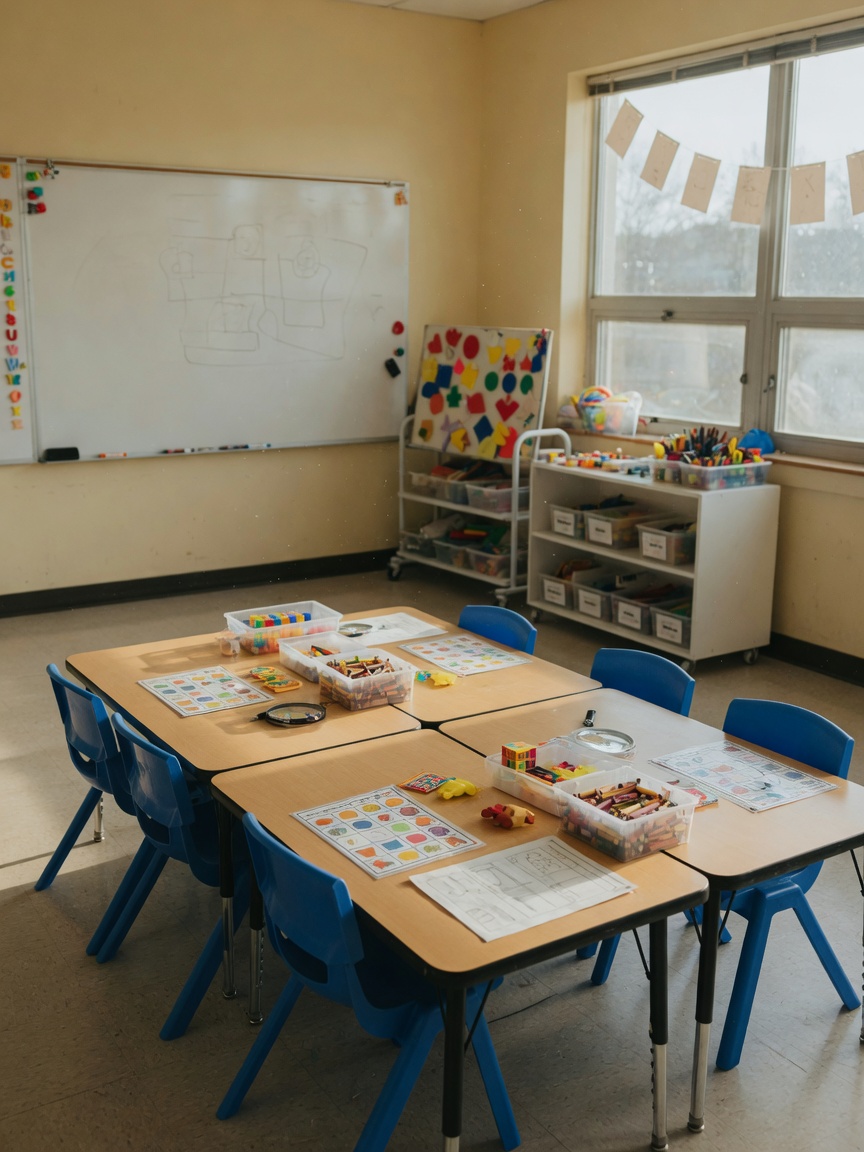
Franchisees operate small learning centers, typically 900-1,200 square feet, that deliver Eye Level's proprietary self-directed learning methods. Students progress through individualized booklets, diagnostic tests, and achievement assessments at their own pace with instructor guidance. The model emphasizes personalized mastery rather than classroom instruction, serving elementary through secondary students seeking enrichment or remediation in core subjects.
DCL was established in 1976 in Seoul, South Korea and has been operating and franchising learning centers since then. It operates and franchises more than 1,000 learning centers globally in 22 countries with combined enrollment exceeding 2 million students and also publishes books and magazines for pre-school through secondary school children.
The business model
How a Eye Level Learning Centers territory actually makes money at the unit level.
Enrollment-Based Revenue
Monthly royalty ranges from $33-$42 per subject-student on a sliding scale with a $1,500 minimum after the first year. An additional $15 enrollment royalty applies per new student.
Required Material Purchases
Franchisees must buy all instructional booklets, tests, and Self-Directed Learning desks exclusively from the franchisor or approved suppliers. These purchases represent approximately 20 percent of operating costs.
Brand Development and Advertising
$1.00 per subject-student contributed to the Brand Development Fund plus cooperative advertising contributions up to $1,000 as determined by local vote.
No Exclusive Territory
Franchisees receive no protected territory. Students may attend any center and the franchisor may open competing locations or use alternative distribution channels.
Multi-Unit Ownership Rare
Operator data shows 60 franchisees with only 2 operating multiple units, indicating the model is primarily single-unit.
Initial Investment Range
Total investment for a single center is estimated between $499,680 and $1,325,500, including leasehold improvements, furniture, three months of payroll, and working capital.
Quick facts
Initial franchise fee
$1,000
Total investment range
$49,968 to $132,550
Royalty
n/a
Marketing fund
n/a
Founded
1991
Headquarters
Fort Lee, NJ
Active US franchisees
60
Total US units
62
Training & support
What the franchisor + parent platform provide. And what they don't.
What's provided
Honest disclosure: what's NOT provided
Item 11 of the the filed disclosures does not disclose any specific initial training program, hours, location, ongoing support details, or advertising and marketing support.
Multi-unit growth path
Multi-unit ownership is uncommon. Aggregate operator data indicates approximately 60 franchisees with only two operating more than one unit. The lack of exclusive territory and requirement to maintain hands-on delivery of individualized instruction limit the scalability of multi-unit operations for most owners.
Capital + financing paths
Most operators use one of these four paths to fund the initial investment.
SBA Loan Programs
Many franchisees finance a portion of the $499k-$1.3M investment through SBA 7(a) or 504 loans. Lenders typically require 20-30 percent equity injection and review the publicly filed disclosures.
Conventional Bank Financing
Local or regional banks may finance equipment, leasehold improvements, and working capital when the borrower demonstrates relevant education or management experience and strong personal credit.
Retirement Plan Rollovers
ROBS transactions allow use of 401(k) or IRA funds to capitalize the business without early withdrawal taxes or penalties when structured through a qualified provider.
Franchisor Resources
The franchisor does not offer direct financing. Rental subsidies of up to $500 per month for the first four months may be available under certain lease conditions.
Process timeline: inquiry → grand opening
Typical 12-16 week path from first call to launching your first customer route.
Discovery & Validation
Review the filed disclosures, speak with existing franchisees, and assess local market demographics and competition.
Franchise Agreement Signing
Pay $1,000 initial franchise fee and $3,000 booklet security deposit.
Site Selection & Lease
Secure 900-1,200 sq ft commercial space; complete leasehold improvements estimated at $18,000-$60,000.
Center Build-Out & Setup
Install furniture, fixtures, signage, computers, and initial instructional materials. Spend minimum $4,000 on grand opening marketing.
Pre-Opening Preparation
Complete any available training, hire and prepare staff, and establish local marketing plans.
Grand Opening
Launch the center and begin student enrollment. First three months may include free enrollment promotions.
Ongoing Operations
Deliver self-directed learning programs, meet minimum royalty thresholds, and manage monthly reporting and material reorders.
Match assessment
Are you a Eye Level Learning Centers match?
12 questions. Math-first. No high-pressure sales call afterwards. Just your match assessment and the reasoning behind it.
Start nowCommon questions
How much does an Eye Level Learning Center franchise cost?
Total initial investment ranges from $499,680 to $1,325,500 according to the investment disclosure of the the filed disclosures. This includes a $1,000 franchise fee, $3,000 refundable booklet deposit, leasehold improvements, furniture, three months of working capital, and other startup costs.
What is the royalty fee for Eye Level Learning Centers?
Monthly royalty is $33-$42 per subject-student on a sliding scale with a minimum of $1,500 after the first year. An additional $15 enrollment royalty is charged for each newly enrolled student.
Does Eye Level Learning Centers provide a financial performance representation?
No. the financial-performance disclosure of the the filed disclosures states that the franchisor makes no representations about future or historical financial performance of franchised or company-owned outlets.
How many Eye Level franchise locations are there in the United States?
As of year-end 2025 there were 121 franchised centers and zero company-owned units. The system added a net three units during 2025.
Does Eye Level grant exclusive territories?
No. Franchisees receive no territorial protection. Students may attend any center and the franchisor may open additional locations or use alternative distribution channels.
What training and support does Eye Level provide to franchisees?
The the filed disclosures Item 11 does not disclose specific initial training hours, curriculum, location, or ongoing support programs. Prospective franchisees should request current details directly from the franchisor.
Can I own multiple Eye Level Learning Centers?
Yes, but multi-unit ownership is uncommon. Of roughly 60 franchisees, only two operate more than one unit. The model requires significant hands-on involvement.
How does Eye Level compare to Kumon or Mathnasium?
Eye Level emphasizes self-directed learning through booklets and individualized pacing versus Kumon's worksheet-based mastery or Mathnasium's instructor-led math focus. Eye Level's franchise fee is lower while total investment overlaps with both competitors.
Are franchisees required to buy materials from the franchisor?
Yes. All instructional booklets, tests, and Self-Directed Learning desks must be purchased from Eye Level or its affiliates. These required purchases represent about 20 percent of operating costs.
What is the typical size and location of an Eye Level Learning Center?
Centers occupy 900-1,200 square feet in commercial retail or office space. Exact costs vary by geography, landlord allowances, and build-out condition.
What is the background of the Eye Level brand?
The curriculum originated with Daekyo Co., Ltd. in South Korea in 1976. The U.S. operation began under the E.Nopi name in 1991 and rebranded to Eye Level. It is now offered by Daekyo America, Inc.
Are there any ongoing advertising fees?
Franchisees contribute $1.00 per subject-student to the Brand Development Fund. Local cooperative advertising contributions are determined by vote and capped at $1,000.
Brand logos displayed for identification purposes only. Hot N Fresh is not affiliated with the brands listed unless explicitly stated.