
Is Snap-on Tools right for you?
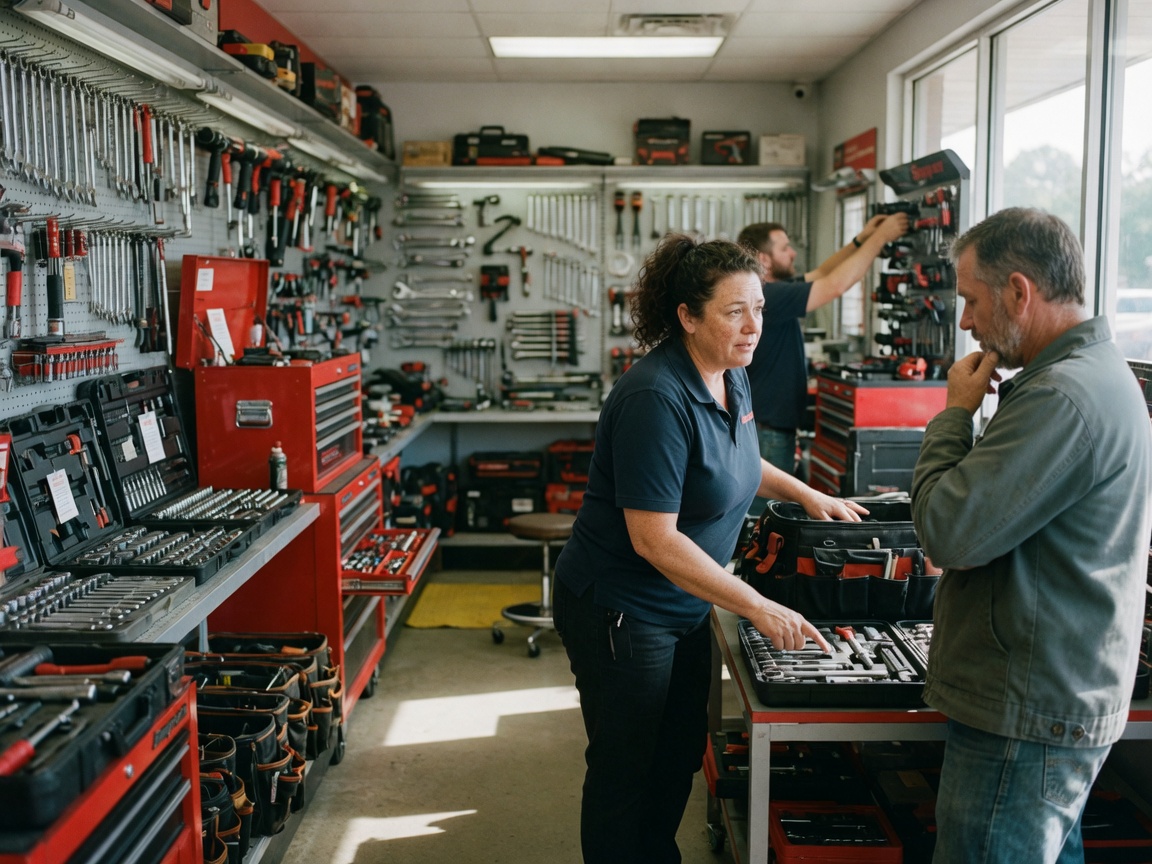
Established Route Model
Each new franchise receives a List of Calls with at least 200 potential core customers at inception, providing immediate access to a defined customer base.
High Gross Margin Potential
Franchisees purchase products at an average 32.19 percent discount from suggested prices, offering a structural guide to gross profit before operating expenses.
National Brand Recognition
Snap-on has been a recognized name in professional tools since 1920, supporting franchisee credibility with mechanics and service centers.
About Snap-on Tools
Snap-on Tools Company LLC, a subsidiary of Snap-on Incorporated, has offered mobile-tool franchises since 1990. The company was founded in 1920 in Milwaukee, Wisconsin and is headquartered in Kenosha, Wisconsin. Franchisees operate a mobile store selling premium hand and power tools, tool storage, diagnostics equipment, and related products primarily to professional mechanics and vehicle service centers on an assigned List of Calls.
Franchisees purchase inventory from Snap-on at a discount and resell it directly to customers on a fixed route of business stops using a company-provided van. Operations center on the Snap-on Program, which supplies branding, customer lists, software, and sales processes. The model requires no fixed retail location and relies on repeat weekly visits, product knowledge, and relationship-based selling to core professional customers.
Snap-on Incorporated is a Delaware corporation and the sole member of Snap-on Tools Company LLC; it is the successor to the original Snap-on Wrench Company and serves as the parent entity.

The business model
How a Snap-on Tools territory actually makes money at the unit level.
Mobile Route Delivery
Franchisees sell exclusively on an assigned, non-exclusive List of Calls. The franchisor retains rights to sell through national accounts, online, industrial channels, and other distribution methods that may overlap with franchisee customers.
Required Product Sourcing
Over 95 percent of purchases must be Snap-on manufactured or approved products bought directly from Snap-on or its affiliates. Franchisees may not sell directly competitive merchandise.
Initial Investment Components
Total initial investment ranges from $223,439 to $509,283. This includes a $16,000 initial franchise fee, $140,000 to $154,000 in initial inventory, van acquisition or lease costs, software license, insurance, and three months of additional funds.
Ongoing Fees and Payments
Franchisees pay a $156 monthly license fee, $94 monthly software maintenance fee, weekly product remittances, van lease and maintenance payments, insurance, and potential financing costs through Snap-on Credit. No royalty or advertising fee is charged as a percentage of sales.
Customer Financing Support
Snap-on Credit LLC provides customer financing programs that generate additional revenue streams for the franchisor while assisting franchisees with collections and repeat sales.
System Scale
As of year-end 2025, there were 3,159 franchised outlets and 169 company-owned outlets in the United States. The number of franchised outlets has declined modestly each of the past three years.
Quick facts
Initial franchise fee
$16,000
Total investment range
$223,439 to $509,283
Royalty
n/a
Marketing fund
n/a
Founded
1920
Headquarters
Kenosha, WI
Active US franchisees
n/a
Total US units
n/a
Training & support
What the franchisor + parent platform provide. And what they don't.
What's provided
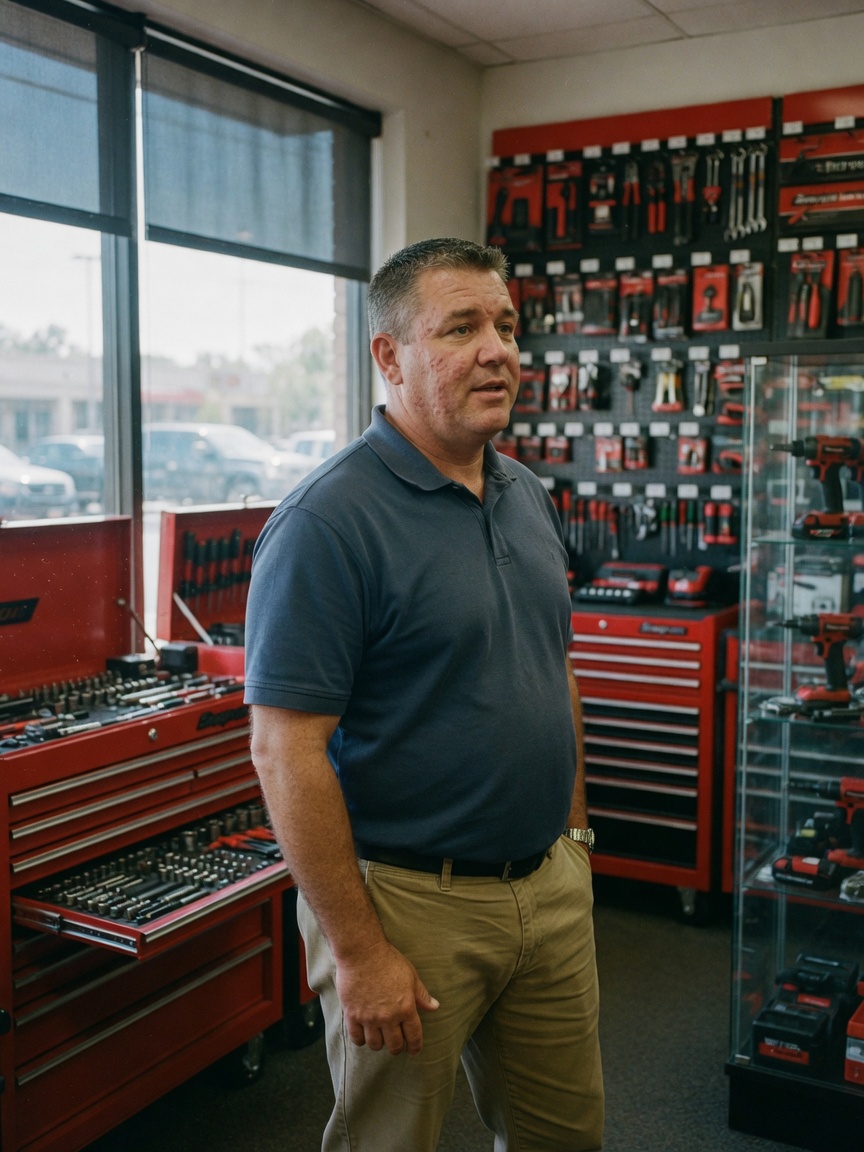
- +Initial Franchise Store Management Training totaling approximately 30.65 classroom hours conducted in Grapevine, Texas or online prior to opening.
- +Orientation on Being a Snap-on Franchisee (4.5 hours).
- +Business Understanding module (5.4 hours).
- +Selling and Collection Skills training (13.25 hours).
- +Computer Training on Snap-on software and systems (7.5 hours).
- +Ongoing access to operational methods, inventory control, product knowledge, sales techniques, and business forms as deemed appropriate by the franchisor.
Honest disclosure: what's NOT provided
No initial training is provided to renewal franchisees. The the filed disclosures does not quantify hours for on-the-job or field training beyond the initial classroom program. No technical, product-specific, or ongoing operational training hours are specified for the full term of the franchise.
Multi-unit growth path
The the filed disclosures does not disclose specific multi-unit development incentives or requirements. Some franchisees acquire additional routes through transfers or new agreements. Multi-unit operators must maintain separate software licenses and dedicated vehicles for each franchise. The franchisor's right to adjust Lists of Calls and sell through overlapping channels may affect the economics of operating multiple routes.
Capital + financing paths
Most operators use one of these four paths to fund the initial investment.
Snap-on Franchise Finance Program
Financing available through Snap-on Credit for initial inventory, van, and other startup costs. Requires minimum down payment of $25,000. Monthly payments estimated at $1,702 to $1,923 depending on option selected.
Revolving Account (RA) Financing
Interest-free or interest-bearing options for acquisition of existing customer revolving accounts from predecessor franchisees. Estimated monthly payments of $1,093 to $1,221.
Veteran, Employee, and Add-on Incentives
Reductions or free initial inventory may be available to veterans, current Snap-on employees, and additional franchisees. Exact terms are not quantified in the the filed disclosures.
Third-Party and Personal Capital
Franchisees may supplement Snap-on financing with personal funds, bank loans, or other sources to cover the full initial investment range and working capital.
Process timeline: inquiry → grand opening
Typical 12-16 week path from first call to launching your first customer route.
Week 1-2
Franchise application, credit review, and execution of the franchise agreement. Payment of initial franchise fee and minimum down payment for financing.
Week 3-4
Secure van through Snap-on Credit lease or purchase program. Complete software license purchase and initial inventory order.
Week 5
Attend initial training program in Grapevine, Texas or online covering business operations, selling skills, and computer systems.
Week 6
Receive assigned List of Calls, van delivery, setup of technology package, and final preparation for launch.
Week 7
Begin operations on the route. First weekly product remittances and customer visits commence.
Month 2-3
Build route momentum, establish weekly call patterns, and manage initial working capital requirements.
Month 4+
Ongoing route management, inventory replenishment, customer financing facilitation, and monthly license and software fees.
Match assessment
Are you a Snap-on Tools match?
12 questions. Math-first. No high-pressure sales call afterwards. Just your match assessment and the reasoning behind it.
Start nowCommon questions
How much does a Snap-on Tools franchise cost?
Total initial investment ranges from $223,439 to $509,283 according to the investment disclosure of the 2025 the filed disclosures. This includes a $16,000 franchise fee, $140,000-$154,000 initial inventory, van costs, software, insurance, and three months of additional funds.
Does Snap-on Tools provide a financial performance representation?
Yes. the financial-performance disclosure discloses 2025 Paid Sales for 2,802 franchises that operated the full year. It also reports an average 32.19 percent discount from suggested prices on product purchases. No earnings claims or net profit figures are provided.
What is the Snap-on Tools franchise fee?
The initial franchise fee is $16,000. A transfer fee of $16,000 applies to purchases of existing franchises. Renewal fee is $8,000.
Does Snap-on charge royalties?
No royalty is charged as a percentage of sales. Franchisees pay a fixed $156 monthly license fee and $94 monthly software maintenance and support fee.
Is territory exclusive with Snap-on Tools?
No. Franchisees receive a non-exclusive List of Calls with at least 200 potential core customers. Snap-on reserves the right to sell through national accounts, online, industrial channels, and other methods that may reach the same customers.
How many Snap-on franchise locations are there?
As of year-end 2025 there were 3,159 franchised outlets and 169 company-owned outlets in the United States.
What training does Snap-on Tools provide?
Approximately 30.65 hours of initial classroom training in Grapevine, Texas or online covering orientation, business operations, selling and collection skills, and computer systems. Renewal franchisees do not receive this training.
Do Snap-on franchisees need a physical store?
No. The model is a mobile van route with no real estate required in most cases. Franchisees operate from a van and visit customers on their assigned List of Calls.
How does Snap-on Tools compare to other tool franchises?
Snap-on is the largest and longest-established mobile tool franchise with a 1920 founding date and over 3,100 franchised units. Its scale, brand recognition, and captive financing arm differentiate it from smaller or newer competitors.
Can I buy multiple Snap-on routes?
Yes. Additional franchises may be acquired through new grants or transfers. Each requires separate vehicles, software licenses, and inventory. Multi-unit operators must manage each route independently.
What are typical Snap-on franchisee reviews?
Prospective buyers should review the full the filed disclosures, speak with current and former franchisees, and consider the net change in franchised outlets which has been negative for the past three years. Individual results vary significantly.
Does Snap-on provide financing?
Snap-on Credit offers financing programs for inventory, vans, and revolving accounts. A minimum $25,000 down payment is required under the primary Franchise Finance Program.
Brand logos displayed for identification purposes only. Hot N Fresh is not affiliated with the brands listed unless explicitly stated.