Is Wingstop right for you?
Proven Scale
2,529 franchised units across the United States as of December 2025, with net system growth of 375 franchised restaurants in 2025 alone.
Transparent Sales Data
the financial-performance disclosure discloses 2025 average annual net sales of $2,020,001 across 2,116 restaurants open the full measured period.
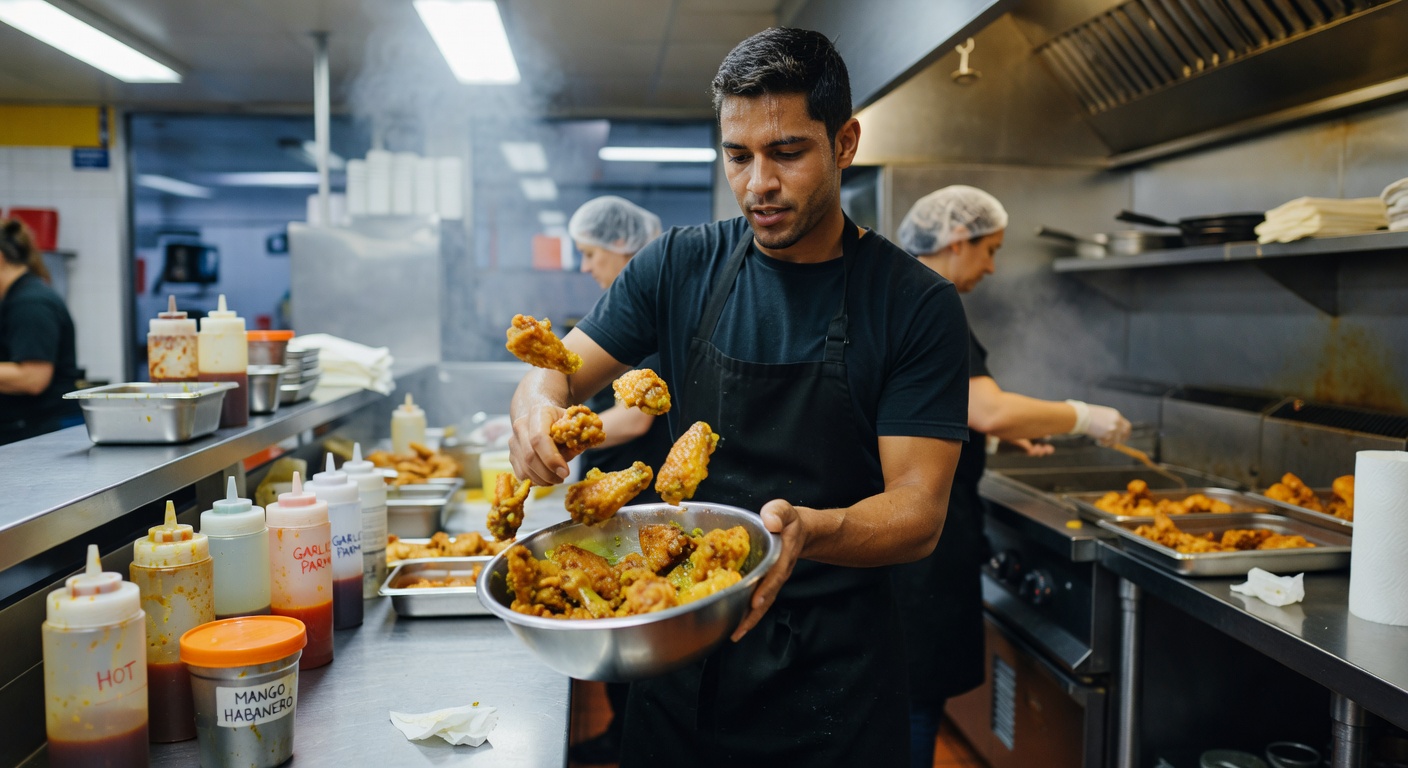
Focused Menu
Limited menu of wings, tenders, fries and beverages drives operational simplicity and high throughput in a takeout-dominant model.
About Wingstop
Wingstop is a leading chicken-wing focused quick-service restaurant concept founded in 1994 in Garland, Texas and headquartered in Dallas. The brand specializes in bone-in and boneless wings, tenders, sandwiches, fries, and beverages offered in 12 proprietary flavors. Wingstop Inc. became a public company in 2015; its wholly-owned subsidiary Wingstop Franchising LLC serves as the franchisor. As of year-end 2025 the system operated 2,586 restaurants, of which 2,529 were franchised.
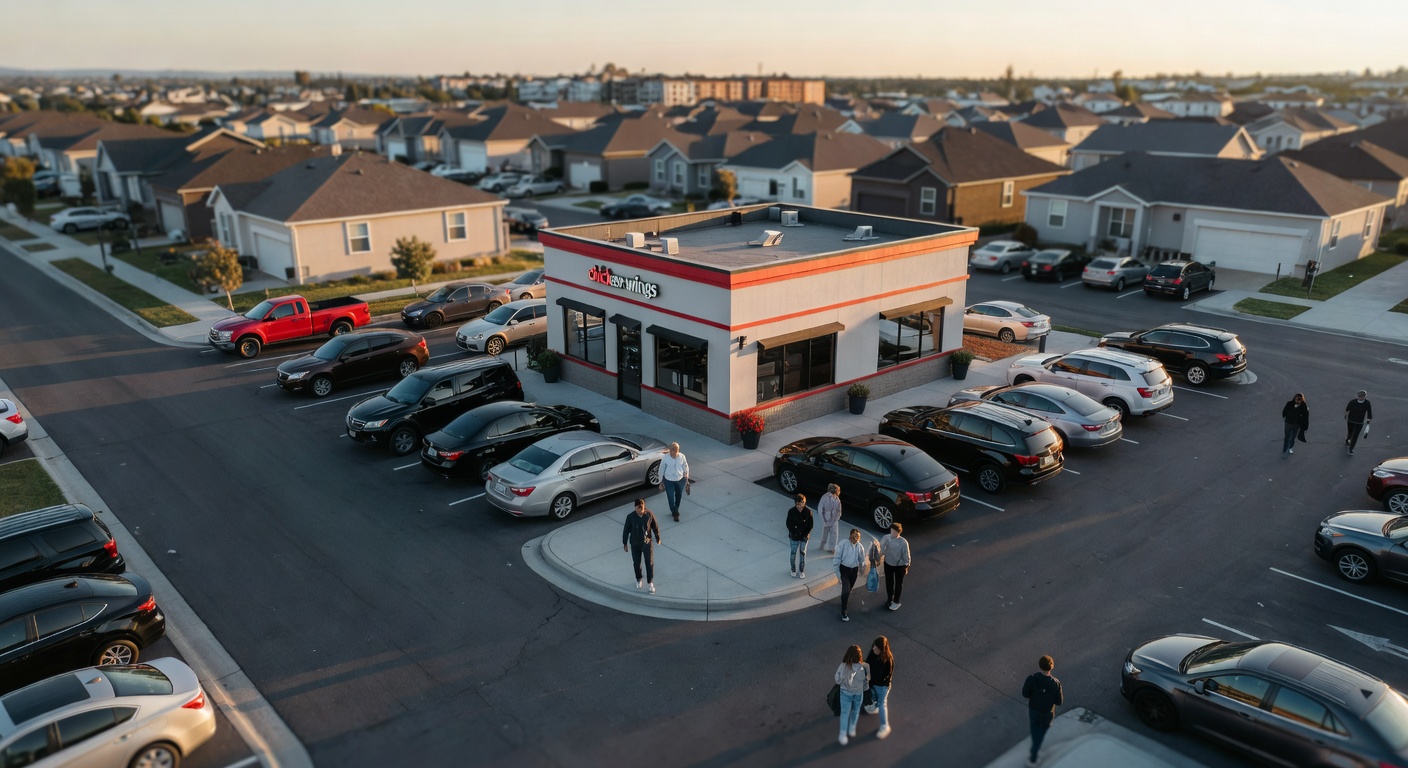
Wingstop restaurants operate in a fast-casual format centered on takeout and delivery. The streamlined menu focuses on chicken wings prepared to order with signature dry rubs and sauces. Operations emphasize consistency through proprietary seasonings, strict supplier specifications, and technology-enabled ordering. Restaurants typically occupy inline or end-cap retail spaces of 1,500 to 2,000 square feet with limited or no seating.
Wingstop Inc. is the ultimate parent company, a public company. Wingstop Franchising LLC is a direct wholly-owned subsidiary of Wingstop Funding LLC, which is a direct wholly-owned subsidiary of Wingstop Guarantor LLC; all were organized as part of the 2018 Securitization Transaction.
The business model
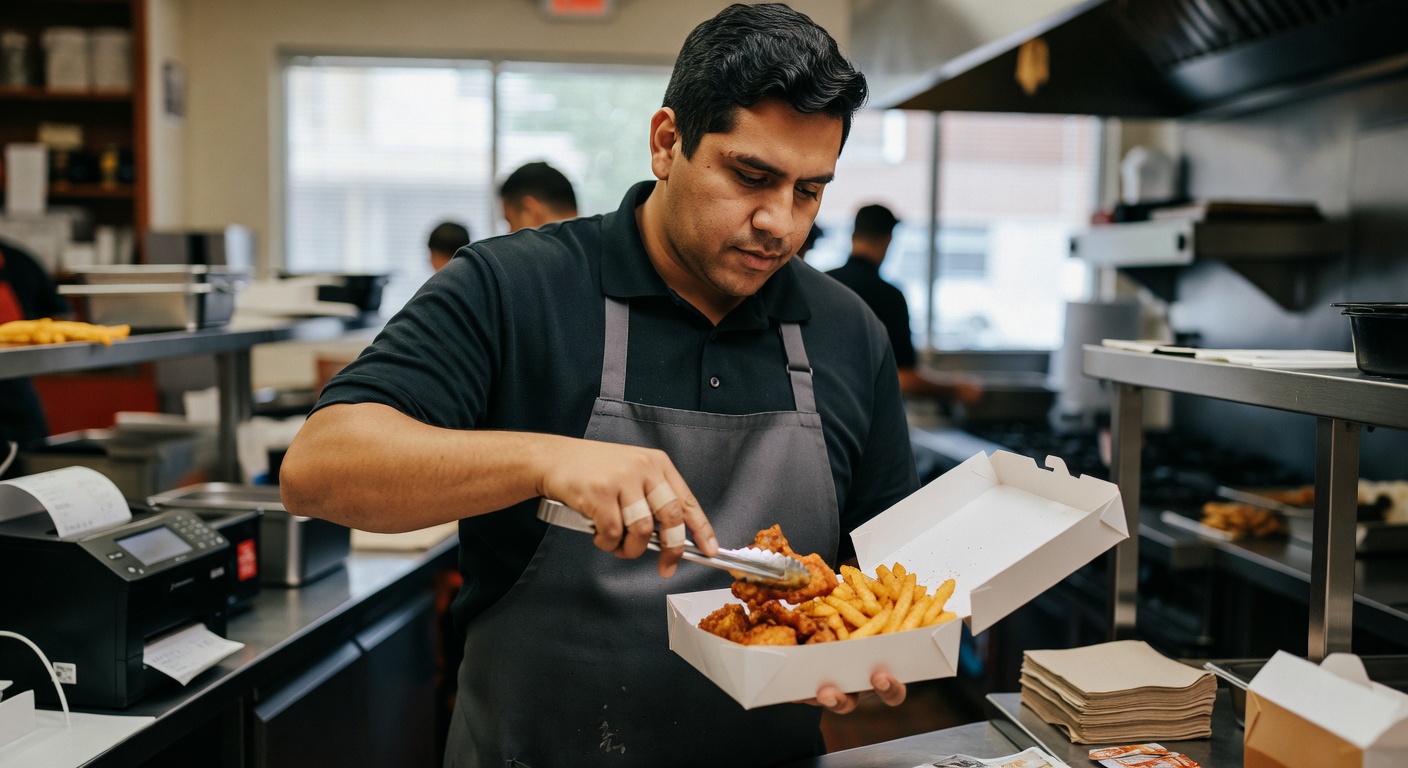
How a Wingstop territory actually makes money at the unit level.
Initial Fees
Franchise fee is $25,000 per restaurant. Area development agreements require an additional $25,000 development fee per committed unit beyond the first.
Ongoing Fees
Royalty is 6% of gross sales. National advertising fund contribution is currently 5.5% of gross sales, subject to adjustment between 5% and 5.5% or higher upon supermajority franchisee vote.
Investment Range
Total initial investment per restaurant ranges from $310,400 to $1,048,500 excluding real estate purchase or lease costs. Major components include leasehold improvements, equipment, signage, inventory, and three months of working capital.
Supply Chain
Franchisees must purchase virtually 100% of food, packaging, equipment and supplies from approved suppliers. Wingstop receives supplier rebates, a portion of which are contributed to the advertising fund.
Unit Economics
Average 2025 net sales reached $2,020,001 across 2,116 qualifying restaurants. 43% of those restaurants exceeded the system average. Chicken commodity costs are subject to market volatility.
Growth Trajectory
Franchised outlets increased by a net 375 units in 2025, following net gains of 277 in 2024 and 199 in 2023. The brand projects 378 additional openings in the next fiscal year.
Quick facts
Initial franchise fee
$25,000
Total investment range
$310,400 to $1,048,500
Royalty
6.00% of gross revenue
Marketing fund
5.50% of gross revenue
Founded
2018
Headquarters
Dallas, TX
Active US franchisees
60
Total US units
1035
Training & support
What the franchisor + parent platform provide. And what they don't.
What's provided
- +Approximately 3-week (22 consecutive days) initial training program totaling 175 hours conducted in Dallas, Texas at the corporate training facility and nearby training restaurants.
- +Curriculum covers Wingstop culture, operations manual, food preparation, food safety and HACCP, position-specific training, POS and back-office systems, marketing, hospitality, and security.
- +At least two individuals (typically the owner/principal operator and general manager) must successfully complete training prior to restaurant opening.
- +Up to 14 days of on-site support from two Opening Restaurant Trainers provided for the first restaurant.
- +Ongoing telephone, email and intranet consultation plus access to updated operations manual and intranet resources.
- +Assistance with planning and executing local grand opening promotions.
Honest disclosure: what's NOT provided
Franchisees must independently complete a state or nationally approved Sanitation Certification Course prior to attending formal training. The program does not cover labor relations or employment practices. Certain pre-opening services are not provided when purchasing an existing restaurant.
Multi-unit growth path
Wingstop actively encourages multi-unit development through area development agreements. Development schedules require franchisees to open a defined number of restaurants within specified timeframes. Larger operators benefit from economies in purchasing, shared general managers, and operational leverage. As of 2025 the majority of new units continue to be opened by existing multi-unit franchisees.
Capital + financing paths
Most operators use one of these four paths to fund the initial investment.
SBA 7(a) Loans
Many Wingstop franchisees utilize SBA-guaranteed loans for a significant portion of the initial investment. Projects typically qualify under standard SBA franchise loan parameters.
Conventional Bank Financing
Regional and national banks familiar with the Wingstop brand may finance equipment, leasehold improvements, and working capital for qualified operators with strong credit and liquidity.
Equipment Leasing
Portions of the audio/visual, kitchen equipment, and POS packages can often be leased, reducing upfront cash requirements.
Franchisee Rollover & Private Capital
Existing multi-unit operators frequently fund expansion through operating cash flow or by bringing in private equity partners.
Process timeline: inquiry → grand opening
Typical 12-16 week path from first call to launching your first customer route.
Discovery & Qualification
Review the filed disclosures, speak with franchise development team, and submit application. Initial conversations focus on financial qualifications and alignment with brand.
Validation
Conduct due diligence including calls with existing franchisees, review of the financial-performance disclosure data, and site selection criteria. Approximately weeks 3-6.
Franchise Agreement Execution
Sign franchise agreement and pay $25,000 initial franchise fee. For multi-unit developers, sign development agreement and pay applicable development fees.
Site Selection & Lease
Identify and secure approved location. Real estate package submitted for franchisor approval. Typically occurs within 90-180 days of signing.
Build-Out & Permitting
Complete architectural plans, secure permits, and oversee construction. Leasehold improvements represent the largest single investment component.
Training & Pre-Opening
Owner and general manager attend 3-week training in Dallas. Receive 14 days of on-site opening support. Finalize staffing, inventory, and marketing.
Grand Opening
Restaurant opens for business. Local marketing support provided. Performance tracking begins immediately through POS and royalty reporting.
Match assessment
Are you a Wingstop match?
12 questions. Math-first. No high-pressure sales call afterwards. Just your match assessment and the reasoning behind it.
Start nowCommon questions
How much does a Wingstop franchise cost?
Total initial investment ranges from $310,400 to $1,048,500 excluding real estate. This includes a $25,000 franchise fee, leasehold improvements, equipment, signage, inventory, and three months of working capital.
What is the Wingstop franchise fee?
The initial franchise fee is $25,000 per restaurant. An additional development fee of $25,000 applies for each additional unit committed under an area development agreement.
What royalties and advertising fees does Wingstop charge?
Royalty is 6% of gross sales. The national advertising fund contribution is currently 5.5% of gross sales.
Does Wingstop provide financial performance representations?
Yes. the financial-performance disclosure discloses average annual net sales of $2,020,001 for 2,116 restaurants open the full 2025 measured period. 43% of those restaurants exceeded the average. No profit figures are provided.
How many Wingstop locations are there?
As of year-end 2025 the system operated 2,586 restaurants, 2,529 of which were franchised. Franchised units grew by a net 375 locations during 2025.
How long is Wingstop franchise training?
The initial training program lasts approximately three weeks (22 consecutive days) and totals roughly 175 hours. Training is conducted in Dallas, Texas. At least two people must complete the program before opening.
What is the Wingstop vs Buffalo Wild Wings comparison for franchisees?
Wingstop operates a smaller-footprint, takeout-heavy model with a narrower menu. Buffalo Wild Wings typically requires larger sports-bar style locations with higher build-out costs and a broader menu including full bar.
Can I open multiple Wingstop restaurants?
Yes. The brand uses area development agreements that commit developers to a specific number of units on an agreed schedule. Most new restaurants are opened by existing multi-unit operators.
What are Wingstop franchisee reviews like?
Prospective franchisees should contact current operators listed in the the filed disclosures. Published validation calls and industry reviews typically highlight strong same-store sales growth and operational simplicity while noting commodity cost volatility.
Does Wingstop own any restaurants?
Yes. As of year-end 2025 Wingstop Inc. operated 57 company-owned restaurants alongside the 2,529 franchised units.
How fast is Wingstop growing?
Franchised units increased by a net 375 restaurants in 2025, 277 in 2024, and 199 in 2023. The brand has projected 378 additional openings for the next fiscal year.
What suppliers must Wingstop franchisees use?
Franchisees must purchase virtually 100% of all products, equipment, and supplies from approved suppliers. Proprietary seasonings, sauces, and branded packaging are required.
Brand logos displayed for identification purposes only. Hot N Fresh is not affiliated with the brands listed unless explicitly stated.